
The Temporomandibular Joint connects the mandible to the temporal portion of the skull. This joint is responsible for the movement of the lower jaw. The joint is present on both sides just in front of your ears.
This joint enables the movement of the lower jaw and also helps in the basic functions like eating and speaking.
Some conditions can cause disruption in the normal functioning of the joints and can cause TMJ disorders. The exact cause of TMJ disorders is unknown, it could be rheumatoid or osteoarthritis, any jaw injury, clenching and grinding, or teeth.
It can present in the form of pain or discomfort in opening and closing the mouth.
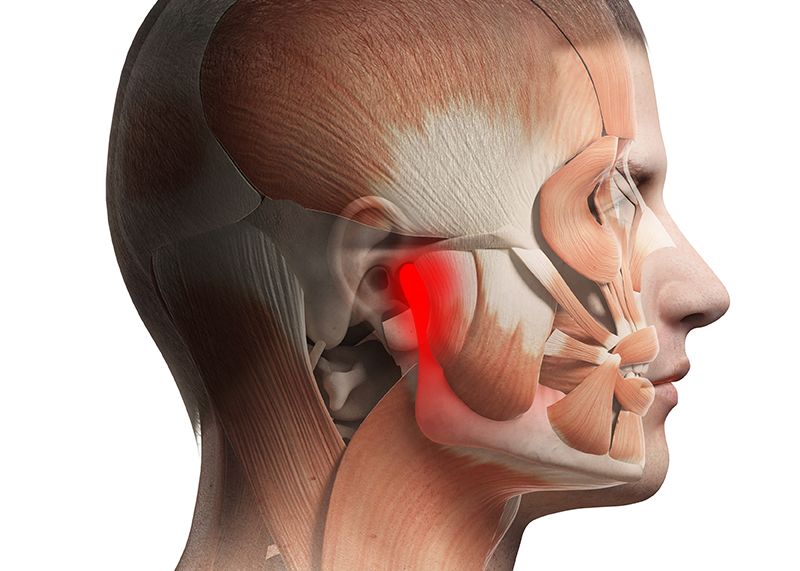
TMJ Disorder
What are the symptoms of TMJ disorders?
- Pain or tenderness in the jaws.
- Difficulty in opening the mouth, reduced mouth opening.
- Clicking sound in the joints
- Locking of the jaws if opened for a long time.
Bruxism or clenching
Bruxism is a condition in which a person grinds or clenches the teeth.
A person who suffers from bruxism may clench the teeth subconsciously during the day and mostly during the night. Most often patients do not realize that they are clenching their teeth. Bruxism can present in the form of:
- Loud clenching and grinding may be disturbing for your partner.
- Attrided or flattened teeth.
- Generalized sensitivity in teeth.
- Pain while you get up in the morning
- Pain that radiates to the head or neck region
What are the reasons for bruxism and clenching?
- Stress or anxiety
- Medications: Some antidepressants and antipsychotic medications.’
- It could be hereditary if anyone in your family has it you may have it too.
Treatment of bruxism:
- Stress management: If you have been stressed, you should consider stress relaxation with the help of medication and various other relaxation techniques.
- Muscle relaxants and heat fermentations: Some medications can help to reduce inflammation and relax the muscles. Heat fermentation also helps to ease the inflammation in the joints.
- Night Guards: Night guards are an efficient way to control bruxism. The night guards create a barrier in between the two arches. When you clench, the night guard acts as a cushion and relaxes the muscles and the jaws.
How are night guards fabricated?
Whenever a patient reports at Vasai Dental Care and Implant Clinic, we conduct a detailed oral examination. A lot of times, patients do not realise the presence of a TMJ disorder. If clenching or bruxism is seen, we take impressions and send to the lab for customised night guards fabrication.
Snoring: Snoring is a coarse sound produced while sleeping. Snoring is a very common condition. Although occasional snoring can happen due to stress or tiredness regular snoring can be a symptom of Obstructive Sleep Apnoea.
What are the causes of Snoring?
-
- Blocked nasal airways: This is a very common cause of snoring. Blocked nasal passages due to allergies or sinus infections can cause snoring. Deviated Nasal Septum can also cause obstruction of the nasal passage.
- Sleeping position: People who have a habit of sleeping on their back can have snoring issues due to the gravity effect which can narrow the throat.
- Anatomy: Some anatomical causes can also lead to snoring. Overweight people may have extra tissue around the throat that can narrow the airways. Children who have enlarged tonsils can have snoring problems. If somebody has an elongated Uvula( the elongated tissue that hangs from the soft palate), the airway can be obstructed.
- Alcohol: Chronic alcoholism can lead to snoring. People who consume alcohol regularly before bedtime are prone to snoring. This happens because alcohol relaxes the throat muscles and at the same time decreases the body’s natural defense against airway obstruction.
- Sleep deprivation
What are the complications of snoring?
- Lethargy during the day
- Difficulty in concentration
- Anger and mood swings
- Risk of high blood pressure and various heart conditions
How can snoring be cured?
Dr. Ajay Mishra and Dr. Pallavi Taneja believe in giving holistic treatment to the patient. A few things that they advise to our patients are:
- Lose weight
- Sleep on either sides
- Limit the intake of alcohol ‘
- Snoring Devices: This works best for the patients. They have been delivering these devices to our patients who have chronic problem and a lot of change is seen in the snoring pattern. The patient is monitored even after the delivery of the device.